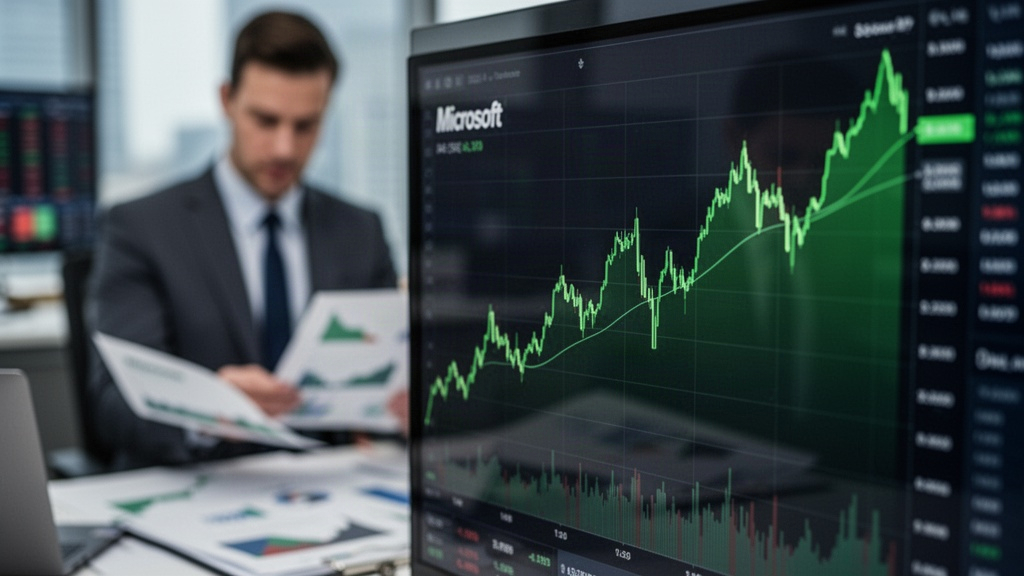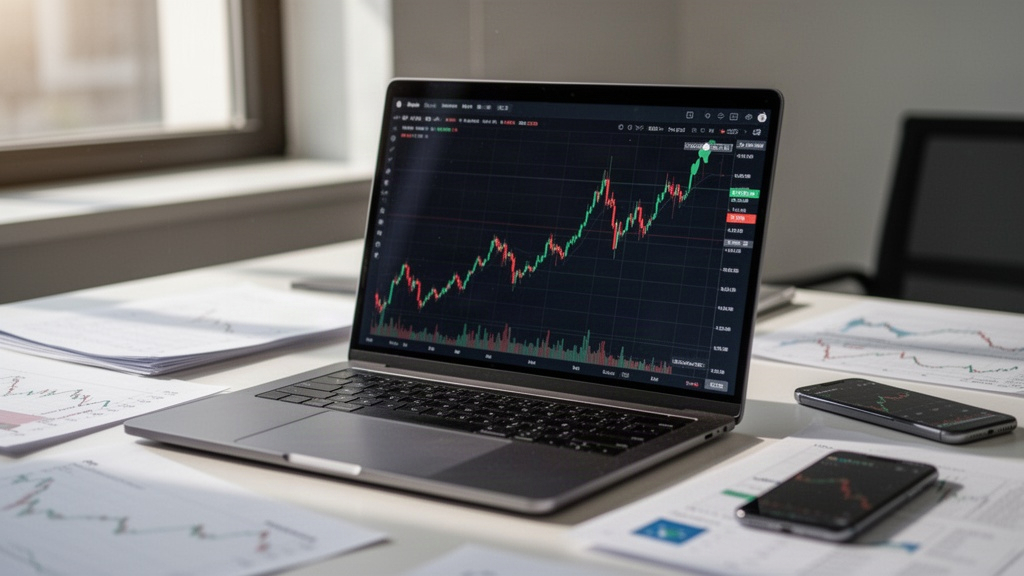
Apple Inc. remains one of the most closely watched companies on the global financial stage, and understanding the stock price Apple computer trajectory is something every serious investor needs to get right. As of January 2026, shares trade around $175, placing Apple's total market capitalization at an extraordinary $2.8 trillion. That figure alone tells you something about the scale of confidence the market places in this company. Yet raw numbers only go so far. Behind every price movement sits a web of product cycles, macroeconomic pressures, regulatory scrutiny, and shifting consumer behavior. Investors who treat Apple stock as a passive holding often miss the signals that separate a well-timed position from an expensive mistake. The sections below break down what is actually driving Apple's price right now, what risks deserve attention, and where the company is headed.
Current Trends Shaping the Apple Stock Price
Apple's share price has not moved in a straight line over the past few years, and that volatility carries real information. After a period of pressure in 2022 and 2023 driven by rising interest rates and a slowdown in consumer electronics spending, Apple's stock staged a sustained recovery through 2024 and into 2025. Annual revenue grew by 10% in 2025, a figure that surprised analysts who had expected the post-pandemic hardware refresh cycle to flatten out.
One of the clearest recent trends is the market's shift in how it values Apple. For years, investors priced the stock primarily on iPhone unit sales. That metric still matters, but the weighting has changed. Services revenue — covering the App Store, Apple TV+, iCloud, and Apple Pay — now commands a premium multiple because it generates recurring, high-margin income. When services growth accelerates, the stock tends to respond faster than when hardware numbers beat expectations.
Trading on the NASDAQ under the ticker AAPL, Apple benefits from index-driven buying. Any institutional fund tracking the S&P 500 or Nasdaq-100 must hold Apple, which creates a structural floor under the price during broad market sell-offs. That dynamic did not exist to the same degree a decade ago, and it partly explains why Apple recovers from dips faster than most individual stocks.
Short-term price action in early 2026 has been influenced by anticipation around the next product cycle. Rumors about a thinner iPhone form factor and expanded Apple Intelligence features have kept sentiment positive. Analyst price targets from firms like Morgan Stanley and Wedbush have clustered in the $190–$220 range, which implies meaningful upside from the current $175 level if execution stays on track.
Factors Influencing Stock Performance
No single variable moves Apple's stock in isolation. The price at any given moment reflects a combination of company-specific developments and broader market forces, and separating the two is what experienced investors spend most of their time doing.
The most direct drivers of Apple's stock performance include:
- iPhone supercycle timing — major hardware refreshes with genuinely new features, such as the transition to USB-C or the integration of on-device AI, consistently trigger buying waves among both consumers and investors.
- Services revenue growth rate — quarterly acceleration in the App Store, licensing fees from Google, and subscription products moves the stock more than headline revenue beats.
- Federal Reserve interest rate policy — as a long-duration growth asset, Apple's valuation is sensitive to discount rates; rate cuts in 2024 were a meaningful tailwind for the share price.
- China sales exposure — roughly 18% of Apple's revenue comes from Greater China, making geopolitical tension and local competition from Huawei a recurring risk factor that traders price in during escalation periods.
- Share buyback program — Apple has returned hundreds of billions of dollars to shareholders through repurchases, which mechanically reduces the share count and supports earnings per share even when net income growth is modest.
Regulatory pressure deserves its own mention. The SEC and the Department of Justice have both examined Apple's App Store practices, and the European Union's Digital Markets Act has already forced changes to how Apple operates in Europe. Legal outcomes in these proceedings can move the stock by several percentage points on announcement days, so investors tracking Apple need a basic understanding of the antitrust calendar.
Supply chain geography is another underappreciated factor. Apple's heavy reliance on Taiwanese and Chinese manufacturing creates headline risk whenever tensions in the Taiwan Strait spike. The company's ongoing effort to diversify production toward India and Vietnam is reducing that exposure gradually, but the transition will take years to complete.
How to Position Yourself as an Apple Investor
Buying Apple stock without a clear framework is how investors end up holding through drawdowns they did not prepare for. The stock has historically rewarded patience, but the entry price and position sizing still determine whether a holding period feels comfortable or stressful.
Dollar-cost averaging works particularly well with Apple because the stock's volatility tends to be moderate compared to smaller tech names. Spreading purchases across quarterly earnings cycles — rather than buying a full position before a single report — reduces the risk of entering at a sentiment peak. Earnings dates are published well in advance on the SEC's EDGAR system and on Yahoo Finance, making it straightforward to plan around them.
Investors who already hold Apple as part of an index fund should think carefully before adding a separate direct position. At $2.8 trillion in market cap, Apple already makes up roughly 7% of the S&P 500, which means most diversified portfolios already carry meaningful Apple exposure without the investor realizing it. Adding a direct holding on top creates concentration risk that is easy to overlook.
For income-focused investors, Apple's dividend yield — the annual dividend payment divided by the current share price — sits below 1% at current prices. That is modest by dividend stock standards, but the company's history of consistent dividend growth and its enormous free cash flow make the payout reliable. The real income story at Apple is the buyback program rather than the dividend itself.
Options strategies, particularly covered calls on existing Apple positions, are a legitimate way to generate additional income during periods when the stock is trading sideways. This approach suits investors who are comfortable holding Apple long-term but want to extract value during consolidation phases rather than waiting passively.
What the Numbers Say About Apple's Future
Apple's forward-looking financial picture is shaped by two competing forces. On one side, the company faces genuine saturation in its core smartphone market across developed economies. iPhone penetration in the United States, Western Europe, and Japan is high, which means growth has to come from either higher average selling prices, emerging markets, or entirely new product categories.
On the other side, Apple Intelligence — the company's suite of on-device AI features — represents a potential catalyst for a hardware upgrade cycle that analysts have been anticipating since the generative AI wave began. If a meaningful percentage of the estimated 1.2 billion active iPhone users upgrades to AI-capable hardware over the next two to three years, the revenue impact would be substantial. The 10% revenue growth recorded in 2025 may represent the early stages of that cycle rather than a one-time spike.
The Vision Pro spatial computing headset, launched in 2024, has not yet moved the revenue needle in a material way. However, the platform gives Apple a foothold in a product category that could matter significantly over a longer horizon. Investors with a five-year view tend to assign some option value to Vision Pro even while acknowledging the current sales volumes are small.
Apple's balance sheet remains one of the strongest in corporate America. The company carries more cash than debt, which gives management flexibility to pursue acquisitions, increase the buyback program, or weather an economic downturn without the financial stress that constrains competitors. That structural resilience is one reason institutional investors treat Apple as a core holding rather than a speculative position.
Reading Apple's Price Signals Without Getting Burned
Apple stock rewards investors who read the right signals and ignore the noise. The most reliable leading indicator of price direction is not analyst upgrades or media coverage — it is the trajectory of services revenue in consecutive quarterly reports. Two or three consecutive quarters of services growth acceleration have historically preceded sustained stock price appreciation, while deceleration has preceded periods of underperformance.
Monitoring insider trading disclosures filed with the SEC is another practical tool. When senior executives sell shares in unusually large quantities outside of pre-scheduled 10b5-1 plans, that pattern warrants attention. Conversely, open-market purchases by executives are a rare and historically positive signal for the stock.
Valuation discipline matters more with Apple now than it did when the stock traded at lower multiples. At current prices, Apple trades at a premium to the broader market on a price-to-earnings basis, which means any growth disappointment carries a larger downside than it would for a stock priced for average performance. Investors who track the price-to-free-cash-flow ratio alongside the P/E ratio tend to get a more accurate picture of whether Apple is genuinely expensive or simply priced for the quality of its business model.
Financial data changes quickly. Verifying current figures through platforms like Yahoo Finance or directly through NASDAQ's official data feed before making any investment decision is standard practice, not optional caution.