
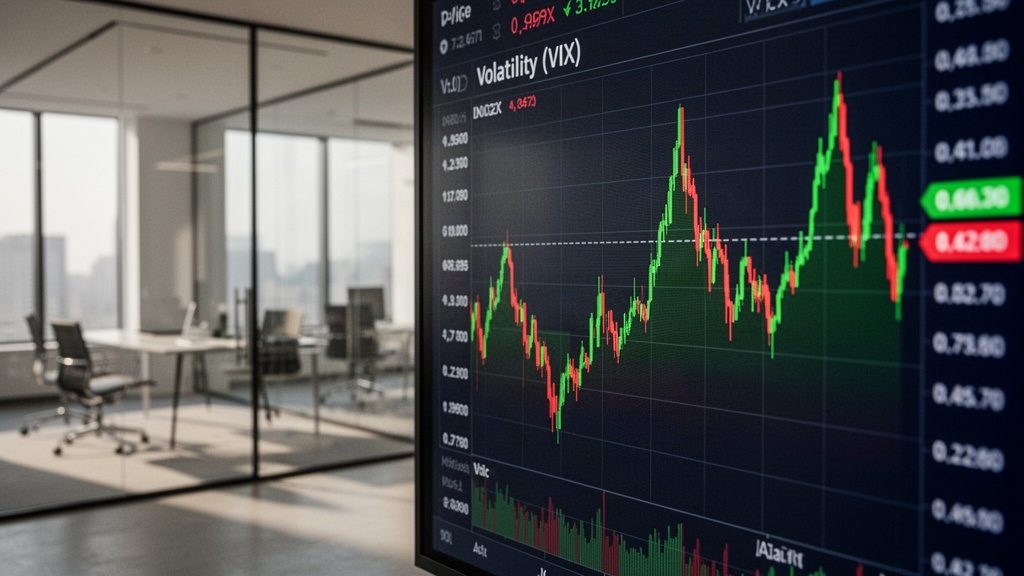
VIX stock sits at the intersection of fear, opportunity, and market intelligence. For investors navigating uncertain terrain, understanding the Volatility Index and the exchange-traded products built around it has never been more pressing. In early 2026, the VIX index registered at approximately 20.5, signaling moderate but watchful market conditions shaped by geopolitical tensions and shifting economic data. Meanwhile, VIX-related ETFs such as VXX and UVXY have been trading in a range between $25 and $30. Whether you are hedging a portfolio or speculating on market swings, knowing where volatility instruments are headed gives you a measurable edge. This piece breaks down what drives VIX pricing, what analysts currently expect, and how to position yourself intelligently.
What the VIX Actually Measures — and Why It Matters
The VIX, formally known as the CBOE Volatility Index, measures the market's expectation of future volatility over the next 30 days, derived from options pricing on the S&P 500. It does not track a stock price directly. It reads market sentiment, specifically the degree of uncertainty embedded in options contracts. When traders expect turbulence, they pay more for options protection, and the VIX rises. When confidence returns, it drops.
CBOE Global Markets created the index in 1993, and it has since become the primary gauge of investor anxiety in U.S. equity markets. A VIX reading below 15 typically signals calm; readings above 30 indicate significant stress. The 20.5 level seen in early 2026 sits in a zone that professionals read as cautious optimism mixed with underlying uncertainty.
What makes the VIX relevant to everyday investors is its inverse relationship with equity markets. When the S&P 500 falls sharply, the VIX spikes. This negative correlation makes VIX-linked products attractive as portfolio hedges. Institutional players like BlackRock and Goldman Sachs routinely use volatility derivatives to manage downside risk across large equity positions. Retail investors, increasingly aware of these mechanisms, have turned to ETFs and ETNs that track VIX futures to access similar protection — or to speculate on volatility itself.
Understanding this dynamic is the starting point for any serious analysis of where VIX-related instruments are heading.
Recent Price Movements in VIX Stock
The trading behavior of VIX-linked ETFs in recent months has been anything but predictable. Products like VXX (iPath Series B S&P 500 VIX Short-Term Futures ETN) and UVXY (ProShares Ultra VIX Short-Term Futures ETF) have oscillated within a $25–$30 band throughout early 2026, reflecting a market that cannot quite decide whether to price in risk or dismiss it.
One pattern worth noting is the persistent drag created by contango. Because VIX futures typically price in higher volatility for future months than currently exists, rolling from near-term to longer-dated contracts consistently erodes value. This structural feature means that holding VIX ETFs for extended periods almost always produces negative returns in stable markets. Traders who understand this use these instruments tactically, not as long-term holdings.
Short-term spikes have been triggered by several events: unexpected Federal Reserve statements, geopolitical flashpoints in Eastern Europe and the Pacific, and periodic concerns around U.S. debt ceiling negotiations. Each of these episodes pushed the VIX above 25 briefly before settling back. The pattern suggests a market that is reactive rather than trending, which creates specific opportunities for short-duration volatility plays.
MarketWatch data from Q1 2026 shows that trading volume in VIX-related products increased by roughly 18% compared to the same period the prior year, indicating growing retail and institutional participation in volatility as an asset class.
Where VIX Stock Could Go From Here
Analysts currently project a potential 15% rise in VIX-related ETF prices over the next 12 months, driven primarily by anticipated economic uncertainty. This forecast, while directionally useful, carries real caveats: volatility is notoriously difficult to predict with precision, and market conditions can shift within days following a single policy announcement or geopolitical development.
The Federal Reserve's rate trajectory remains the single most watched variable. If the Fed holds rates higher for longer than markets currently expect, equity valuations will face renewed pressure, and the VIX will likely climb. Conversely, any clear pivot toward rate cuts could compress volatility sharply, sending VIX-linked products lower despite the bullish forecasts.
A secondary driver is the U.S. presidential policy environment in 2026. Trade policy shifts, regulatory changes, and fiscal spending debates all feed into the uncertainty premium that the VIX captures. Geopolitical tensions in multiple regions add another layer of unpredictability that keeps a floor under volatility readings.
Some analysts at firms including Goldman Sachs have flagged that the current 20.5 VIX level may be understating real risk, given how compressed credit spreads remain relative to historical norms. If that gap closes, a sharp VIX repricing is plausible. The base case, though, points to a gradual drift upward rather than a single dramatic spike.
Factors Influencing VIX Stock Prices
Multiple forces shape the price of VIX-linked instruments at any given time. Some are macroeconomic, others are structural features of the products themselves. Knowing which factors carry the most weight helps investors anticipate moves rather than react to them after the fact.
The following elements directly affect VIX pricing and the performance of related ETFs:
- Federal Reserve policy decisions — rate changes and forward guidance directly alter options pricing on the S&P 500, which feeds into VIX calculations
- Geopolitical events — armed conflicts, trade disputes, and diplomatic crises trigger rapid spikes in implied volatility
- Corporate earnings seasons — large beats or misses from major index components create short-term volatility bursts
- Contango and futures roll costs — the structural drag that erodes value in long VIX positions over time, regardless of market direction
- Equity market liquidity conditions — tighter liquidity amplifies price swings and pushes volatility expectations higher
Beyond these direct drivers, sentiment indicators such as the put/call ratio and the AAII investor sentiment survey offer early signals of when volatility may be about to shift. Experienced traders cross-reference these with VIX term structure data published daily by CBOE Global Markets to build a more complete picture.
One underappreciated factor is the behavior of systematic volatility-selling strategies employed by large asset managers. When these strategies are crowded, they suppress VIX artificially. When they unwind simultaneously — as happened dramatically in February 2018 — the resulting spike can be severe and rapid. Monitoring the scale of short-volatility positioning through CFTC Commitments of Traders reports provides a useful early-warning signal.
Practical Approaches to Trading Volatility Instruments
Trading VIX-related products requires a fundamentally different mindset than buying equities. These are not buy-and-hold instruments for most investors. The contango drag discussed earlier means that a position in VXX or UVXY left untouched for six months will almost certainly lose value even if volatility remains elevated, simply because of the rolling cost embedded in the structure.
The most effective approaches treat VIX instruments as short-duration tactical tools. Buying VXX ahead of a known risk event — an FOMC meeting, a major earnings release, a geopolitical flashpoint — and exiting within days captures the volatility spike without suffering excessive roll decay. This requires discipline around entry and exit timing.
For investors seeking longer-term volatility exposure, options strategies on the VIX itself offer more precise control. Buying VIX call options with a strike above current levels provides upside exposure to a spike without the daily decay burden of futures-based ETFs. Vanguard Group and other large asset managers typically access volatility through derivatives rather than ETPs for exactly this reason.
A portfolio allocation of 2–5% in VIX-linked hedges, rebalanced dynamically based on the VIX term structure, has historically reduced drawdowns during equity market corrections without significantly impairing long-term returns. The data from the 2020 market crash and the 2022 bear market both support this allocation range as a practical hedge band. Staying informed through sources like CBOE's official data portal and Yahoo Finance gives retail investors access to the same raw information that professionals use to make these calls.